
Property investmentin Amed
Amed stretches along the east coast of Bali, in the kabupaten of Karangasem, facing Mount Agung. Fishing villages, bays and diving draw a nature-oriented tourism. The property market is more intimate, and more dependent on distance, than those of the south.
Talk about your projectDiscover Amed
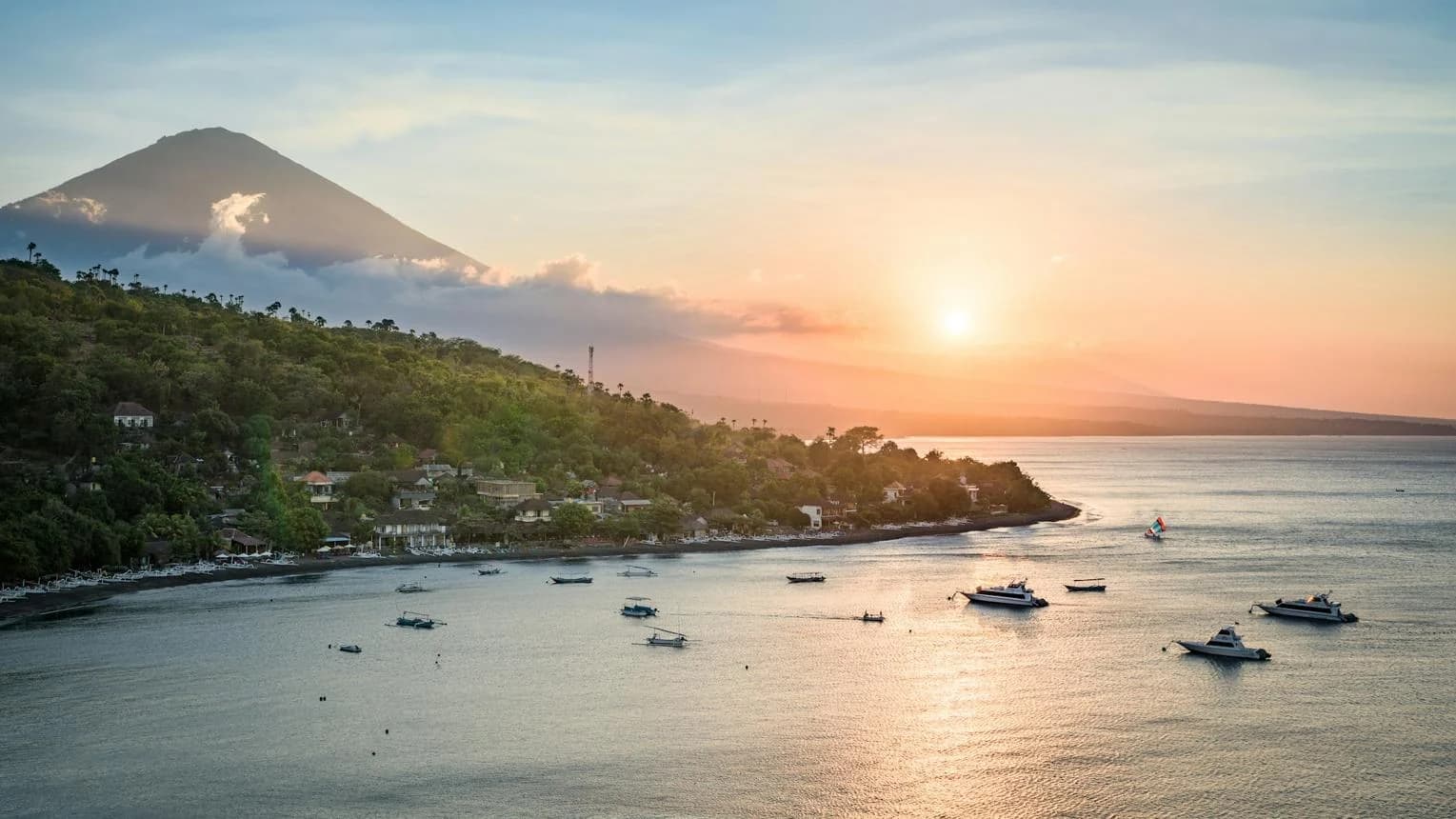
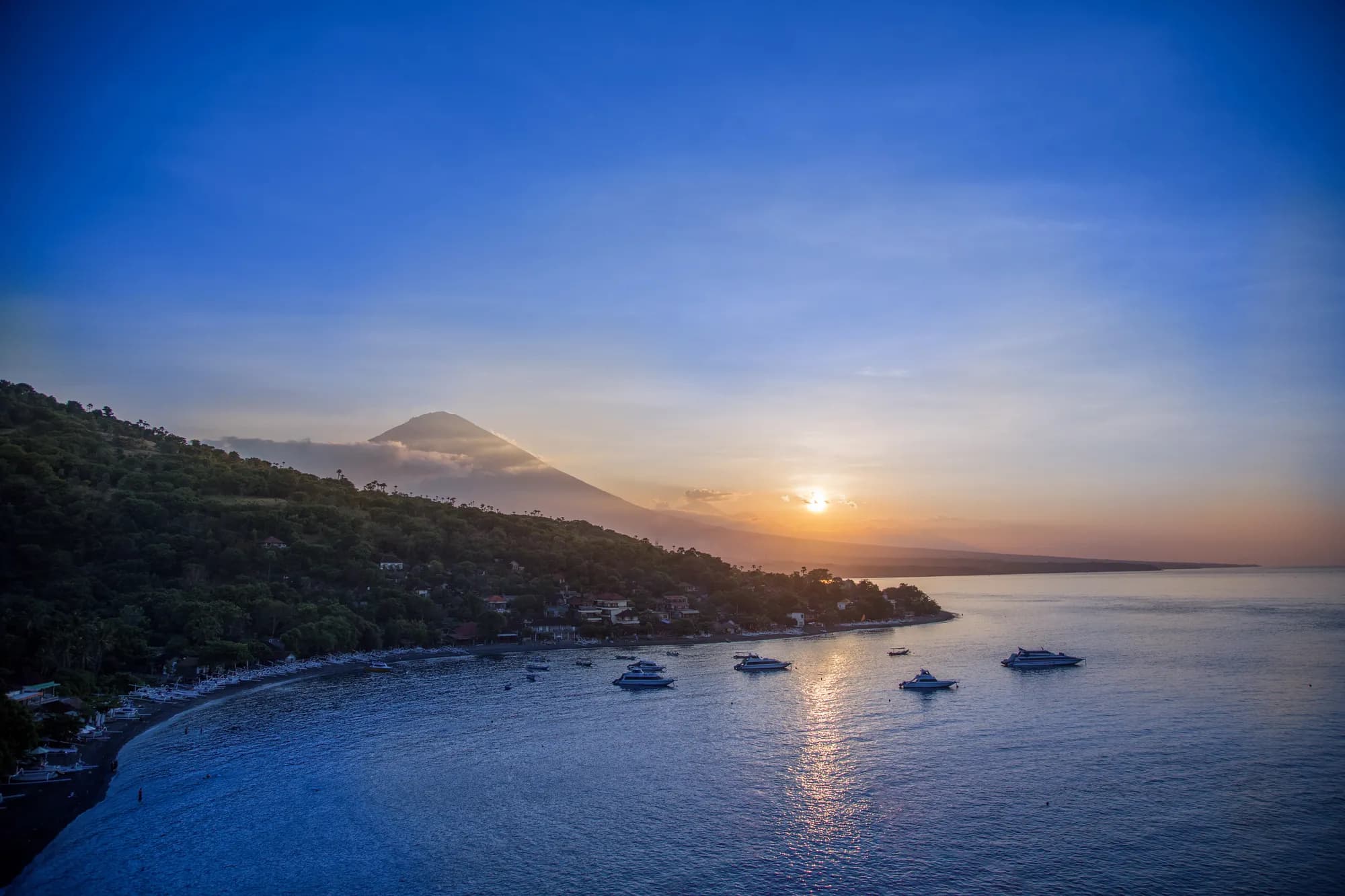
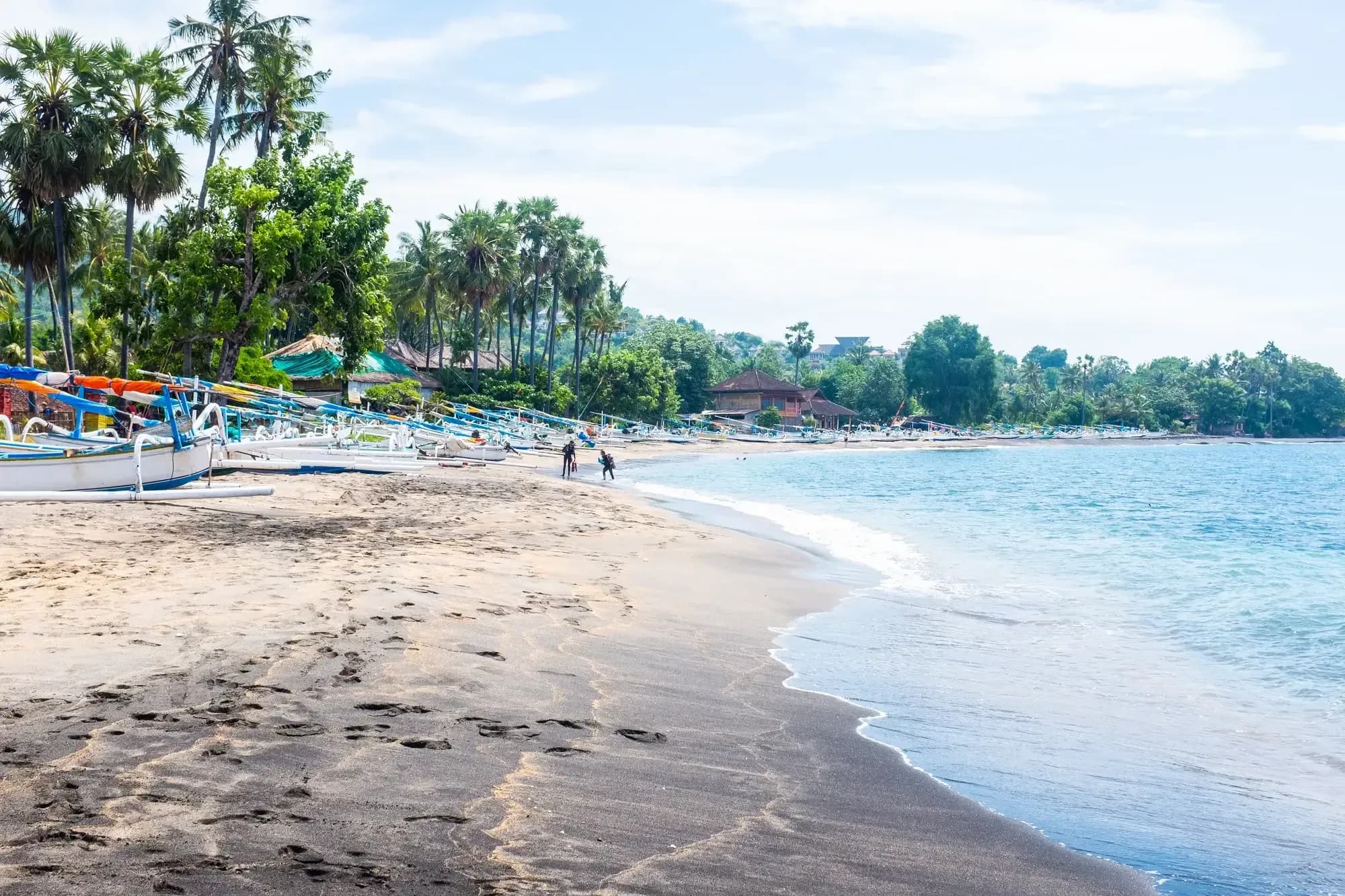
Amed is not a single village lined up behind one beach. It is a succession of coastal communities in Karangasem, between the relief, gardens and coves of pebbles or dark sand. Jemeluk and Lipah are among the bays most used by divers and by overnight guests. Mount Agung closes the horizon when the weather is clear. The fishing boats remain in the landscape, and in daily use as well as in photographs.
The tourism is marine and oriented towards nature. People come for snorkelling, for diving along the drop-offs, and for a slower scale of stay than in Canggu or Uluwatu. Accommodations are often small, set between the coastal road and the water. There are restaurants, little nightlife, and a strong dependence on the road that links the east of the island to the south.
Tulamben and the wreck of the USAT Liberty lie further north, in the Kubu area. They belong to the day trip and to a diving stay on the east coast. They are not in the village of Amed. Saying so avoids attaching to an address a site that is a drive away.
Distance from the tourist south is the major fact. It protects a way of life, and it makes a property harder to fill outside the periods when divers and long-distance travellers are on the move. Amed is a specialised destination, on a different footing from an established market such as Canggu.
Why visit Amed?
Divers, independent travellers and couples in search of quiet account for most of the visitors. A share of nature tourism adds to that, drawn by Agung and the villages. Digital nomads, large families and the beach-club clientele are marginal. Surf is not the reason for the stay.
01
Jemeluk
Jemeluk bay is one of the most accessible points for diving and snorkelling on this coast. The reef begins near the shore. For an accommodation, that proximity is a real argument with divers, provided the property is actually practical for them.
02
Lipah
Lipah continues the coast as a more residential bay, with accommodations facing the water and shallow dive sites. The pace is that of a village, at the scale of a village rather than a resort. The quiet is part of the demand, and it is also the limit of that demand.
03
Fishing villages and Mount Agung
Jukung, nets drying and the view of Agung make up the everyday setting. It is a working coast, in active use. A property project here stands next to a fishing activity and to a volcano whose presence is a reminder that the east coast has a geography of its own.
04
Tulamben, nearby
The wreck of the USAT Liberty, off Tulamben, is the best-known dive site on this coast. It is visited from Amed, and it is not located in Amed. A property should not be sold as if it stood at the foot of the wreck when that is not the case.
Why invest in Amed?
Amed’s property appeal rests on an identifiable marine tourism and on intimate accommodations, often single-storey, facing the sea or Agung. Rental demand is real in this niche, and narrow outside it. The tenants who fit are divers, couples and travellers who stay a few nights for the site, sometimes a little longer for the quiet. Large villas built for entertaining, modelled on the south, do not find the same pool of guests here.
The market is less mature and less liquid than those of Canggu or Uluwatu. That cuts both ways. There is less competition from identical accommodations, and there are fewer travellers as well. A property’s advantage is settled by its exact situation — the bay, access to the water, noise from the coastal road — and by management able to receive a specialised clientele that is passing through.
The limits should be stated as they are. Distance from the south lengthens transfers and can discourage part of the short-stay market. Season and sea state weigh on diving. The range of services is thinner, which matters for operation as much as for personal use. Amed can suit a specific project. It is not, by default, a safer holding merely because it might be called still preserved. The coastal road deserves to be seen at several times of day. It is narrow in places and often separates the plot from the water. A property on the hillside does not offer the same stay as a property on the sea side. For divers, that difference is immediate.
What next for Amed?
Amed already has what makes its tourism: the coast, the villages, the dive centres and the road that links them. There is, on this page, no new airport, port or public project to present as secured. To announce that the east will catch up with the south would be a projection, and a projection is not a fact.
The most credible course is the continuation of small-scale marine tourism, sensitive to the condition of the reefs and to the quality of the welcome. That demand can hold without the stock of villas having to resemble the Bukit’s. It can also stall if the transfer from the south remains a constraint and if the supply of accommodations exceeds the number of divers.
The environmental constraints are direct: the reefs, the water, and coexistence with fishing. The reputation of the Tulamben wreck does not decide the future of a property in Amed. That future stays tied to the property’s location, to its right and to a demand the operator can observe, rather than extrapolate. The dive centres, the road and the villages already form the infrastructure of the stay. There is no other dated facility to add to them. For visitors, the condition of the reefs and access to water will count for more than one more residence.
Your property project in Amed
BEL-AIR treats Amed as a specialised destination, on its own terms and apart from a simple extension of southern Bali. We start from your objectives, then look at whether a development and a bay answer them. Location, construction and the contract are studied before the acquisition steps. The legal and tax advice required by your situation has to be confirmed outside this presentation. Distance from the south is measured by making the journey, on the road rather than on a map.
Speak with an adviser