Title
- What to check
- Hak milik is not open to a foreigner. A nominee is not a recognised route. Hak sewa is common. It is not, on its own, the most reliable solution.

Investing in Bali
By Mathieu MAILLOT — 7 min read
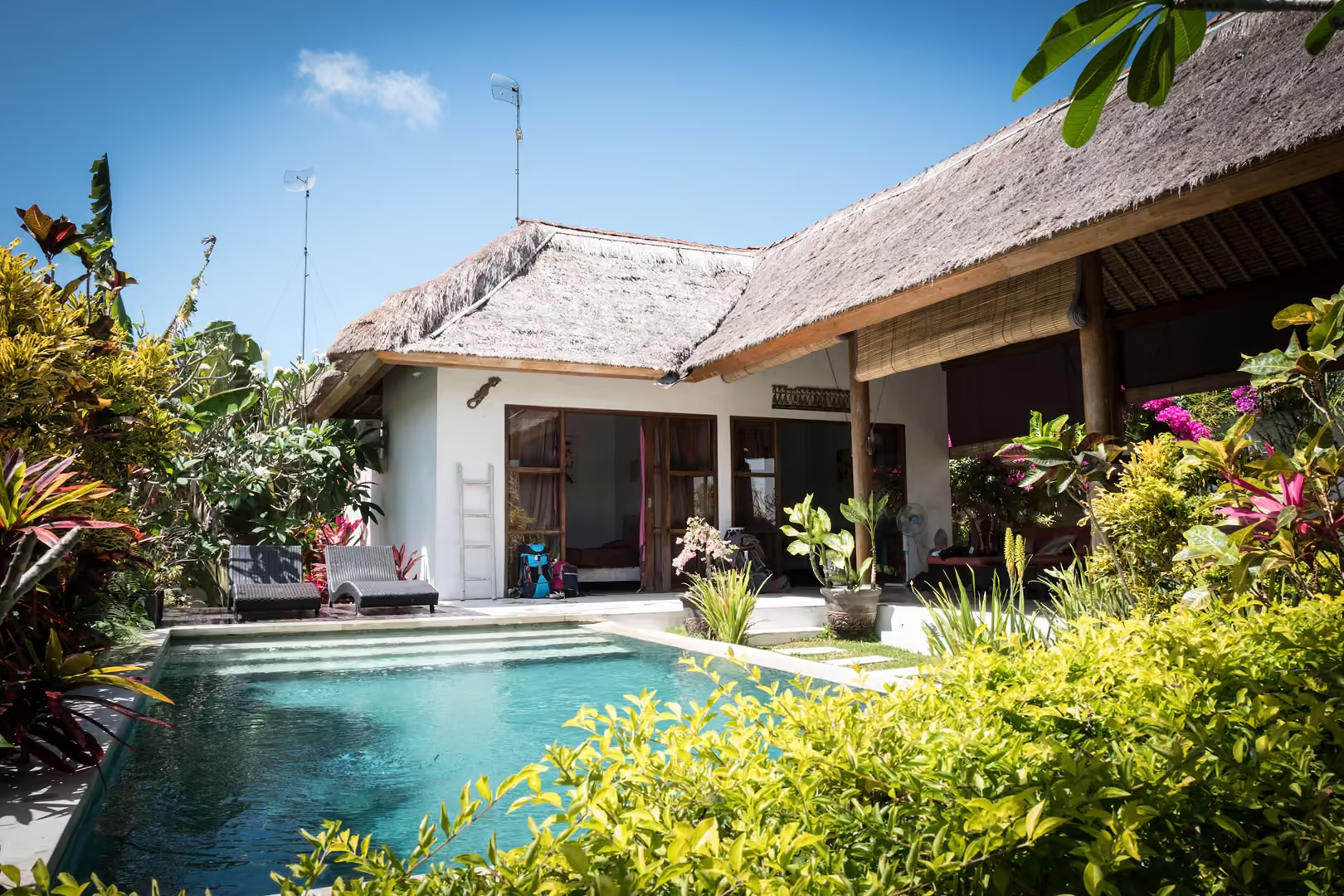
The island of Bali appeals through its way of life and its setting. No yield is stated here. Yet, before buying abroad, it is essential to inform yourself precisely about the main risks of property investment in Bali. The local legal context, the specifics of the land system, tax, and leasehold purchase strategies raise many questions for any non-resident buyer.
Bali attracts both individuals looking for a rental return and professionals who want to take advantage of a very active tourism market. Caution is still required: the Indonesian legal framework differs markedly from European standards, both in ownership rights and in administrative process. Between prohibited nominee arrangements, off-plan purchases that must be tightly controlled, zoning constraints, essential permits (PBG, SLF) and precise tax requirements, every step has to be anticipated. Here is how to secure a project through rigorous due diligence based on official sources.
What are the main legal and land risks?
The regulatory environment in Bali is not comparable with that of France. Investing in Bali means understanding the restrictions imposed on foreigners and the mechanisms that allow a property to be acquired and operated lawfully. Government Regulation No. 18 of 2021 sets, in particular, the ceilings for HGB and hak pakai on state land. Text of the regulation: PDF of regulation No. 18 of 2021
Indonesian law does not open hak milik to foreigners. A nominee, under which a local third party officially holds the property, is not a step in a purchase and is not a recognised way to hold this title. The arrangement may be unenforceable. Nullity, loss of the property or proceedings are not automatic: they depend on the facts and are confirmed with a lawyer.
Hak sewa is a common framework. It is not, on its own, the most reliable solution. The contract, any renewal if it is provided for, and the traceability of the original title all need to be checked.
Buying a property off-plan offers an attractive price and customisation, but it carries risks: delays, unfinished sites, loss of a deposit or structural defects. These situations can weigh heavily on the return of a rental investment.
To limit these pitfalls, examine the developer’s reputation and financial strength, consult verified opinions, require transparency on the permits (PBG, SLF), and insist on an independent completion guarantee. A bank commitment letter can also strengthen the security of the operation.
Different levels of authorisation are required to operate a property investment in Bali lawfully. Respecting zoning, obtaining the right permits and complying with tax obligations condition the success and the return of your operation.
Indonesian zoning divides land between residential, tourism and agricultural uses. A property outside a buildable or tourism zone can become unusable, prevent licences from being obtained, or lead to later prohibitions on use.
The PBG building permit (Persetujuan Bangunan Gedung) attests to the administrative and structural compliance of the building. Its absence exposes you to a risk of demolition or greatly complicates a future resale. Always require this official document before any purchase.
Careful due diligence is essential: analysis of the land title, validation of the contracts, a check of the mortgage position of the land and of the seller’s legitimacy. The involvement of an independent local notary or a specialist lawyer is strongly recommended.
Have all documents officially translated to avoid any misunderstanding. Check the written term of the hak sewa, the extension mechanism if one exists, and registration of the lease. Renewal is not automatic.
Behind the appeal of a property investment in Bali, three aspects should hold your attention: tax, the risk of rental vacancy, and the conditions for resale or for transferring funds after a sale.
Operating a furnished property in Bali involves filings with the Indonesian tax authorities — and sometimes with the French authorities if you remain a French tax resident. Reporting obligations and the mechanisms intended to avoid double taxation are checked according to tax residence, the income concerned and the applicable treaties. A tax credit is not systematically available. VAT and the taxes linked to a letting are checked according to the activity. They are not added automatically.
The absence of an SLF is a point to deal with before you operate. The possible consequences are confirmed locally, with appropriate advice.
If the rental return advertised in Bali looks high, you still have to consider quiet periods, unpredictable changes in tourism and greater competition. A high vacancy rate reduces the net return and raises questions about how durable the cash flows are.
On resale, several obstacles can appear: the remaining leasehold term, market movements, regulatory change or tighter control of currency transfers. To anticipate these challenges, it is essential to build in the property’s liquidity and financial traceability from the initial negotiation.
Title
Developer and off-plan purchase
Zoning
Operation
Resale
| Point of care | What to check |
|---|---|
| Title | Hak milik is not open to a foreigner. A nominee is not a recognised route. Hak sewa is common. It is not, on its own, the most reliable solution. |
| Developer and off-plan purchase | Reputation, permits, and a completion guarantee only if one is actually offered. |
| Zoning | The permitted use. Non-compliance can compromise operation or resale. |
| Operation | Licences depend on the activity. The contract is not enough. |
| Resale | The remaining term, the assignment clauses and the conditions for transferring funds. |
An expatriate investor does not hold hak milik. The frameworks to examine are hak sewa, for the term of the contract, and, depending on the project, hak pakai. A lease of 25 to 99 years is not a legal category. Ignoring the right actually recorded on the title exposes you to cancellation of the transaction. Notarial follow-up and registration of the lease reduce that risk.
To secure an acquisition, gather the following documents:
Keep these records to make any resale easier and to prove compliance.
A renewal option exists only if the contract provides for it. It is not present in every lease, and it is not acquired. Repatriation of funds depends on the transaction, the structure and the exchange-control and tax rules that apply. It does not come down to a general rule.
Careful preparation and reinforced due diligence help you examine a project. They do not produce a yield.

We advise international investors looking in Bali and Lombok: location, budget, how to hold the asset, and which projects to consider.