
Investing in Bali
Can a Foreigner Buy a Villa in Bali?
By Mathieu MAILLOT — 7 min read
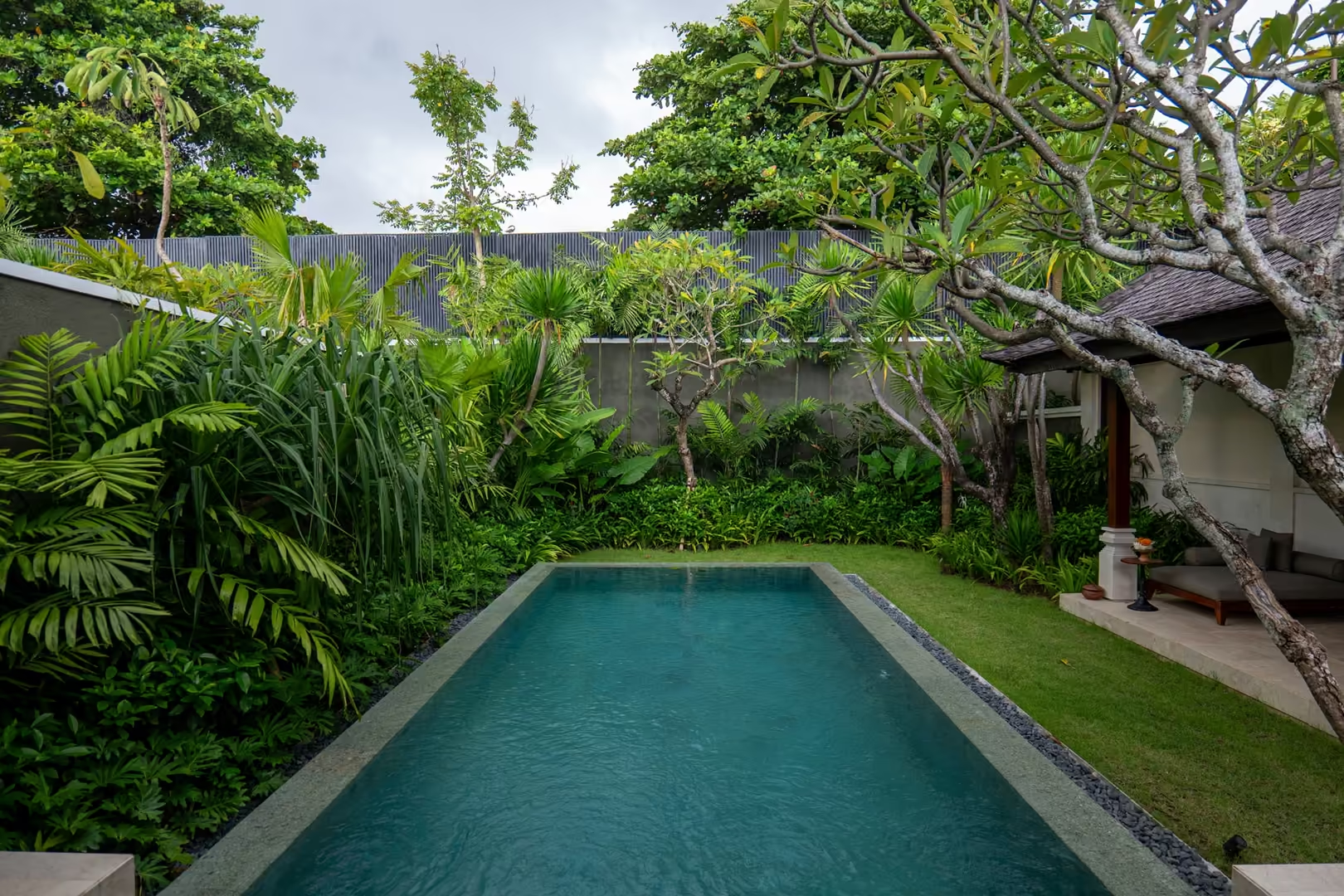
The idea of buying a villa in Bali appeals to many French-speaking investors. But is it actually possible for a non-Indonesian buyer? Freehold title, hak milik, is not open to a non-Indonesian. Other frameworks exist: hak sewa, hak pakai and, where the activity justifies it, an Indonesian company. None of them is a guarantee. The right obtained, its term and the permitted use are checked on the title and the contract. The process differs from the French system. To carry a project through, you need to understand the nuances of the different property rights, the administrative requirements, and the checks required to secure your investment.
Property rights in Bali: what a foreign investor can expect
Unlike French law, which is based on freehold ownership, the Indonesian system offers several specific regimes for buying property in Bali. The status you choose affects legal security, the period of use, how the asset can be passed on, and the potential return on the acquisition.
For a foreigner, five main structures shape the market: Hak Milik, leasehold (Hak Sewa), Hak Pakai, HGB (Hak Guna Bangunan) and a purchase through a PT PMA. It is essential to understand the differences before any financial commitment, and to consult the land-rights regulations in order to understand the applicable legal framework.
Hak Milik, leasehold and Hak Pakai: what are the fundamental differences?
Hak Milik corresponds to the French notion of “freehold”: the land and the buildings are held with no time limit. This status remains closed to foreigners, with no exception and no lawful indirect route.
Leasehold (hak sewa), by contrast, is a contractual right of use. Its term is the term that is written. Renewal exists only if it is provided for. During that period, use, management and assignment of the remaining right are those the lease allows. The land does not become the investor’s property. This form of acquisition is common among foreign investors. It is not a guarantee in itself.
Hak pakai is a right of use, often considered for a residence. The conditions, including those on stay, are confirmed against the applicable regulation. On state land, its fixed term follows the ceilings of 30 years, then 20 years, then 30 years, in stages. Commercial use does not follow automatically from the title. Resale and transfer remain subject to the authorisations required.
Acquisition through a PT PMA: a possible framework for building and operating
To hold a right to build, foreigners can set up a PT PMA, an Indonesian company with foreign capital. That company can then hold an HGB (Hak Guna Bangunan). On state land or a management right, Government Regulation No. 18 of 2021 caps it at 30 years, then an extension of no more than 20 years and a renewal of no more than 30 years. Each stage must be applied for and is not acquired on signing. Text of the regulation: PDF of regulation No. 18 of 2021
Contrary to a common assumption, an HGB is not the same as freehold. It is a temporary real right: at each expiry, the company must apply to the authorities for an extension. The main interest of a PT PMA lies in the ability to operate the property (tourist letting, commercial activity) and to hold several properties lawfully.
When is setting up a PT PMA the better choice?
A PT PMA is particularly suited to investors aiming at short-term letting, hospitality or tourism development. It gives access to tax and legal mechanisms adapted to professional investment.
This structure is better avoided for a simple private residence, because it involves fixed costs, annual accounting obligations and regular oversight by the Indonesian administration.
Buying without a company: options and risks for an individual
Hak pakai is a right of use whose conditions, including those on stay, are confirmed against the applicable regulation. Outside that framework, buying in your own name carries significant risks. A nominee is not a step in a purchase, nor a recognised way to hold hak milik. The arrangement may be unenforceable. Nullity, loss of the property or proceedings are not automatic: they depend on the facts and are confirmed with a lawyer. Hak sewa is common. It is not, for that reason, the safest route. The prudent course is to sign before a local notary and to review the contract: term, handback, renovation and subletting.
Every clause should be clear and consistent with local regulation, so as to reduce the scope for disputes and to support the durability of your investment in Bali.
Letting, tax and return on a property in Bali
Letting a villa attracts many investors, because tourist demand is strong. The right you hold is not enough to open tourist letting: zoning, licences and tax depend on the activity. A PT PMA may be the structure suited to commercial operation. A hak sewa contract, on its own, does not demonstrate that. Tourism Regulation No. 18 of 2016 defines the “villa” activity and its registration. It does not designate the corporate form. VAT and the accommodation tax are checked against the text that covers that activity. No rate is stated here. Text of the regulation: PDF of tourism regulation No. 18 of 2016
It is therefore essential to study your objectives before choosing an acquisition structure, so as to align the return and the compliance of the operation.
Checks and precautions: due diligence before buying property in Bali
The Balinese market carries real risks: forged titles, missing permits, double sales. Before any signature, take the time to check:
- The authenticity of the title and the absence of a mortgage
- The zoning certificate and planning compliance
- The validity of the building permit (IMB or PBG)
- Whether the lease or the HGB can be extended
- The reputation and track record of the developer or seller
FAQ — Buying a villa in Bali as a foreigner
Here are clear answers to questions frequently asked by French-speaking investors.
Can a foreigner obtain Hak Milik title in Bali?
No. Freehold (Hak Milik) is reserved exclusively for Indonesians. No structure, foreign company or visa gives access to it.
Alternatives do exist, however: leasehold, Hak Pakai (for residents), or a PT PMA for commercial use.
What is the main difference between leasehold and freehold?
Hak sewa grants use for the term of the contract. Hak milik is not open to foreigners. Depending on the project, the framework to examine is a hak sewa, a hak pakai, or a company able to hold an HGB. The choice is confirmed on the documents.
When a leasehold expires, an extension has to be negotiated; nothing is guaranteed automatically.
Can a property acquired on leasehold in Bali be let?
Yes, provided the landowner’s written consent is in the contract and the letting is operated under a lawful framework (through a company for tourist letting).
Letting without following these rules exposes you to tax and administrative penalties. A sound grasp of property tax in Bali is essential.
How can you protect yourself against changes in the legal environment in Bali?
Choose transparent structures and comply carefully with the regulations. Provide for mediation or international arbitration clauses in your contracts to strengthen your legal protection.
A tailored review by a local legal specialist is strongly recommended before any financial commitment.

Let’s talk about your property project in Bali
We advise international investors looking in Bali and Lombok: location, budget, how to hold the asset, and which projects to consider.
- No obligation
- Confidential
- A personal conversation